When health becomes data, it also becomes power

Ricky Bloomfield is Oura’s first chief medical officer, with a background in medicine, clinical informatics, health records, and digital health. Before joining Oura, he worked at Apple on health records integration. In a recent interview, Bloomfield discussed the system forming around the Oura Ring: health data is becoming more abundant, more intimate, and more commercially valuable, while still being difficult to integrate into real clinical care.
The American Medical Association’s 2026 international survey found that physicians see clinical value in wearable data, but no country surveyed reported workflow integration above 6%. In other words, many clinicians and health professionals recognize the potential of wearable data, but health systems are not yet built to absorb it properly. Interoperability may be the foundation, but it is not the only barrier. Clinical validation, reimbursement, workflow, liability, regulation, and trust also decide whether wearable data can enter care.
That is where Bloomfield’s point about regulation becomes important. Wearables often sit in a grey zone between wellness as a consumer category and medical devices. A ring may track sleep, temperature, pulse, recovery, or breathing-related patterns. But for those biometric signals to have medical value, they need to be accessible, interpretable, and clinically meaningful. That is still far from routine clinical practice.
This is where the business of health becomes impossible to ignore. Health is care, science, prevention, public responsibility, and human vulnerability. But it is also one of the most relevant and protected economic sectors in modern society. In 2024, OECD countries allocated, on average, 9.3% of GDP to health. Portugal allocated 10.2%, above the OECD average. In Portugal, private hospitalization reached record activity in 2024, according to the Portuguese Association of Private Hospitalization, with 131 private hospitals and 10.7 million consultations. Informa D&B reported aggregated private-hospital revenues of €2.505 billion in 2024, up 11.6% from the previous year.
That is part of the reason why I find this topic so important. Health is increasingly a business, not only because companies see economic opportunity, but because people are paying more attention to their own bodies. As concern with health, prevention, and longevity grows, more people are watching signals, tracking routines, comparing data, and trying to improve their wellbeing. Wearables sit exactly at that intersection: personal concern, technological measurement, medical uncertainty, and commercial value.
When a user receives a potential health warning, how can a medical professional look at the data, understand the context, and decide what to do with it?
Wearables help people understand their bodies better. A smart ring, a smartwatch, or a smart band sits on the body day and night. It measures patterns we may not notice ourselves. A smart ring turns sleep, recovery, temperature, cardiovascular signals, and daily habits into dashboards, alerts, and predictions. Consumers increasingly understand this. The medical community knows this. The medical technology industry knows this too, although established diagnostic pathways, reimbursement models, regulatory processes, and intellectual-property protections often move much more slowly than consumer data platforms.
Wearable technology companies are also cautious about making claims that could pull them deeper into medical-device regulation or create friction with the clinical industry. Formal certification can bring recognition, but it also brings cost, scrutiny, and ongoing obligations. That caution helps explain why the most interesting signals in consumer health technology often arrive first as wellness insights, not as medical claims.
Apple’s own healthcare positioning makes this paradox visible. The company has long built health-related features around its devices while carefully separating general wellness claims from regulated medical functions. At the same time, its healthcare pages show that Apple devices are already being positioned as part of hospital care, care at home, medical research, IT deployment, security, and clinical workflows.
And yet, even when wearable signals are useful and supported by research, their adoption across routine care remains uneven. Some ecosystems already provide ways to connect patient-generated data with clinical records, but this is still far from a universal, simple, and standardized pathway for every device, every clinician, and every health system.
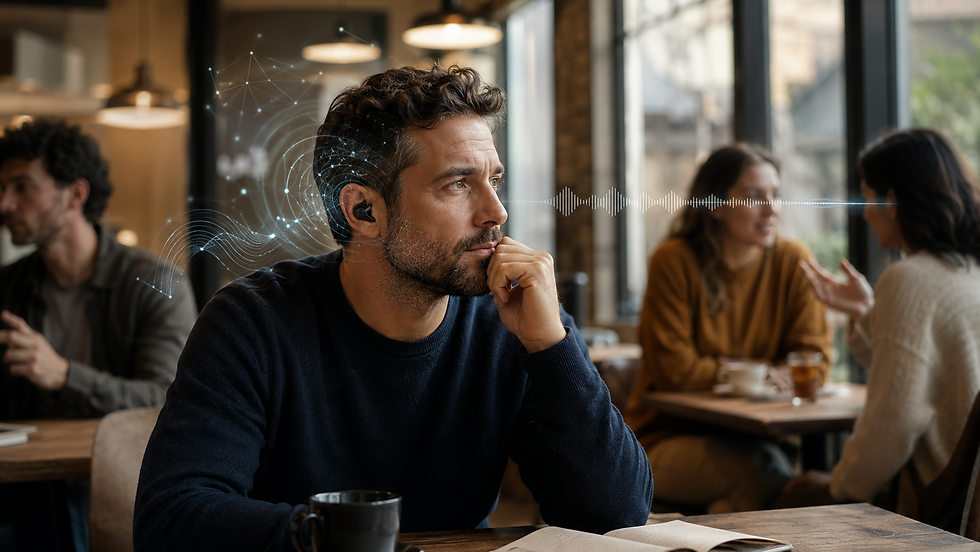
This is not limited to rings or watches. In audio and hearables, audioXpress has been following the emergence of brain-sensing earbuds and in-ear biosensing platforms. The ear, like the finger or the wrist, is a natural source for health signals, neural signals, voice interfaces, and adaptive systems. If these signals are used for health-related services, they will likely require clearer regulatory interfaces.
The question is not simply whether this is good or bad. Bloomfield’s interview raises the regulatory question. A broader social question follows: how should health technology prevent sensitive personal data from being used in ways people did not expect, especially by third parties with commercial interests?
Who controls the data, who validates the claims, who pays for integration, and who remains responsible for care when the signal reaches the screen? These are no longer secondary questions. They are becoming part of the infrastructure of digital health itself.
Sources and further reading
• American Medical Association — Wearable data adoption stalled by system barriers.
• OECD — Health at a Glance 2025: Portugal.
• Informa D&B — Hospitais privados batem recorde em 2024, superando os 2,5 mil milhões de euros de faturação.
• Apple — Healthcare.
• WIPO — Frequently Asked Questions: Patents.
• audioXpress — IDUN Technologies: From Concept to Real-World Brain-Sensing Platform.
• audioXpress — IDUN Technologies and Analog Devices Join Efforts to Unveil Brain-Sensing Earbuds at CES 2025.